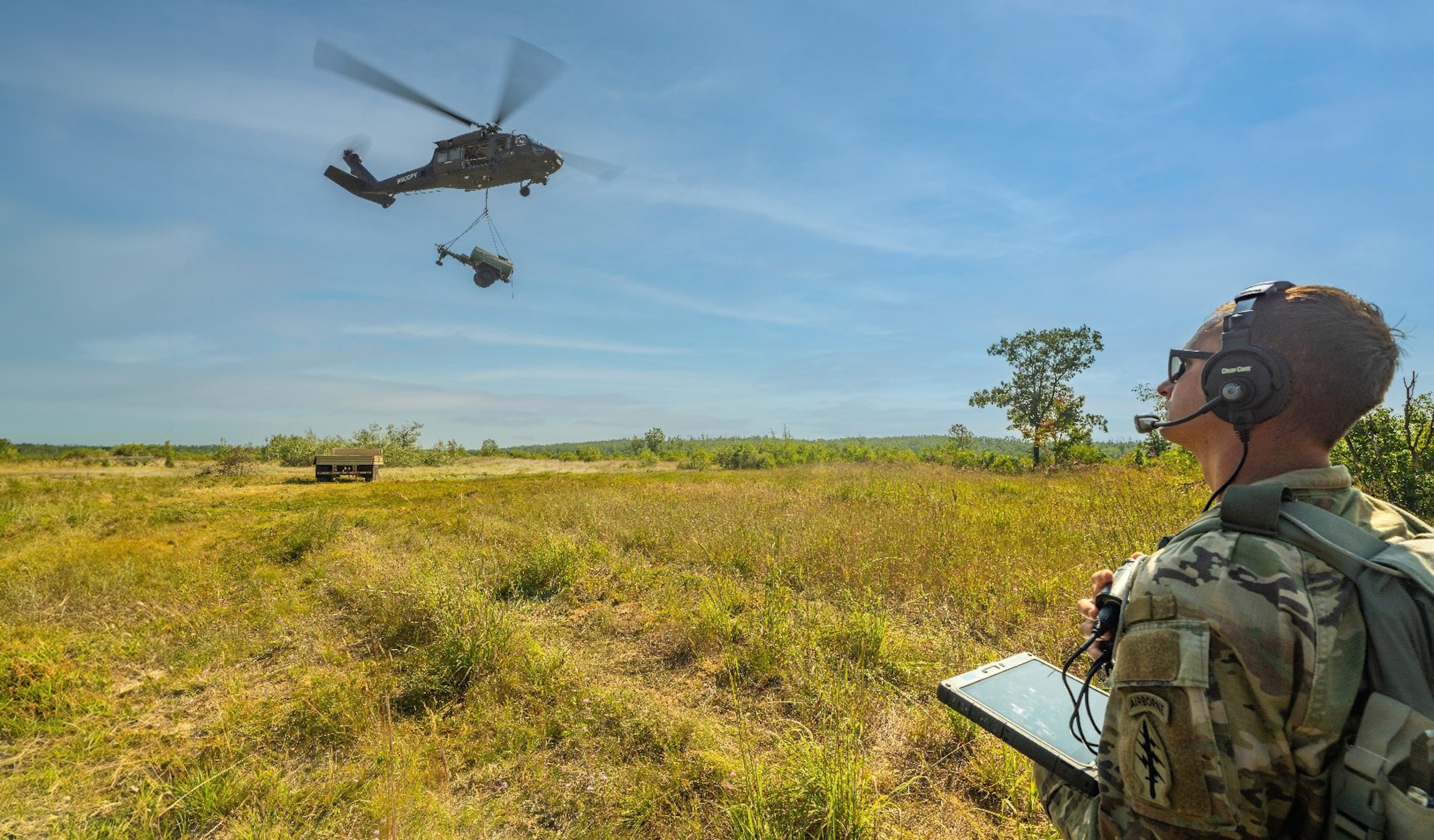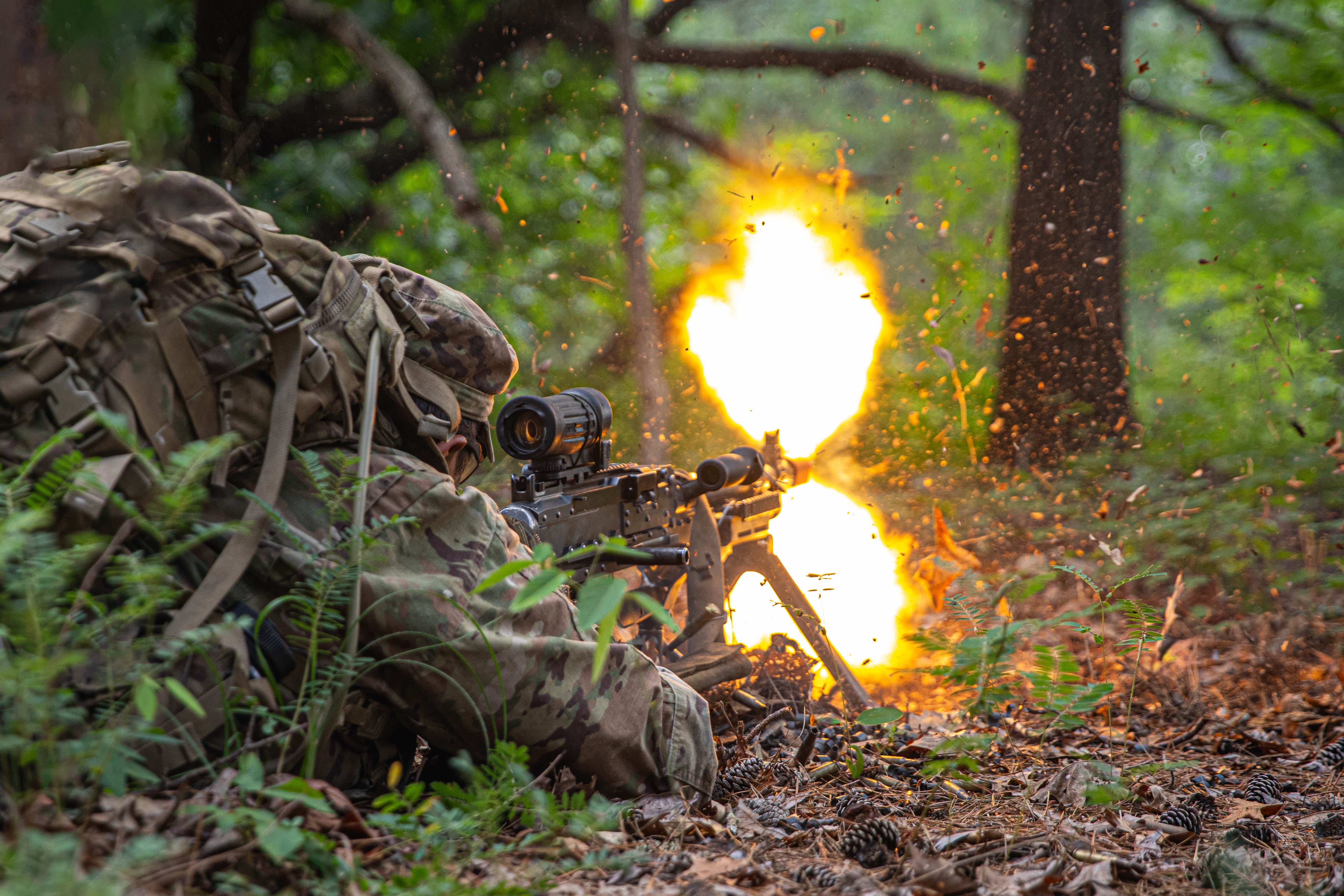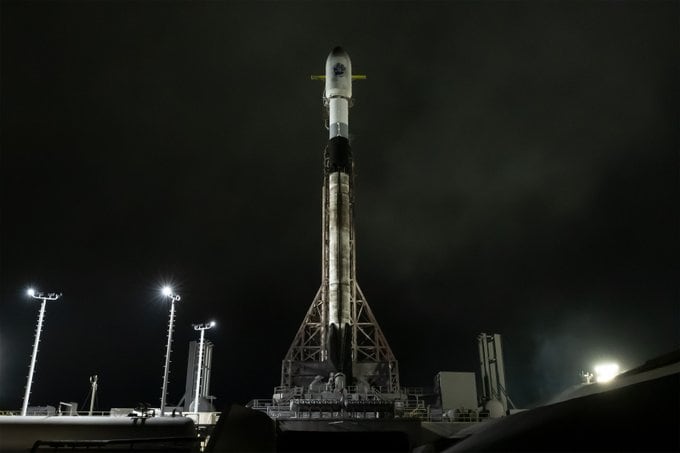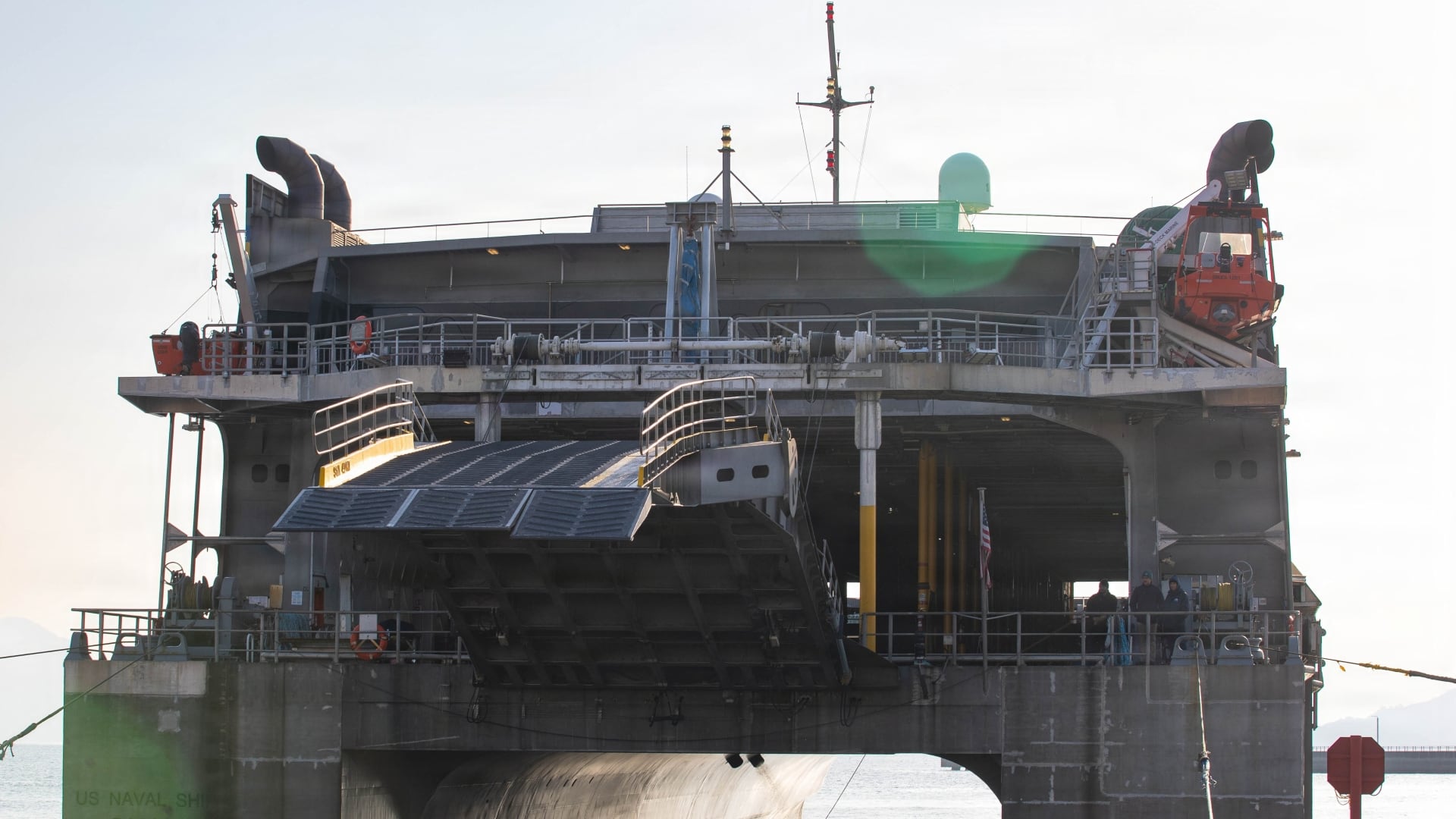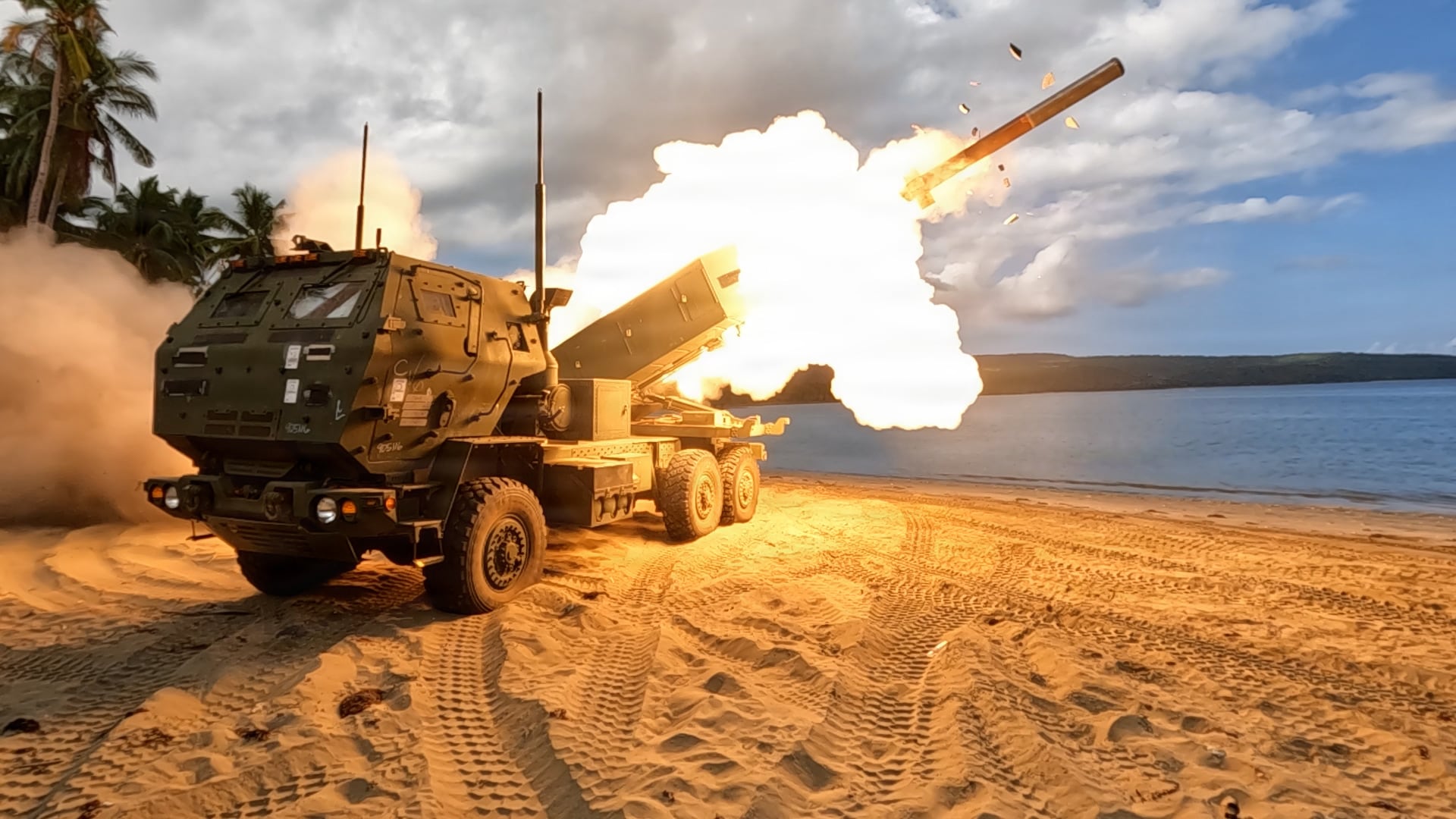
PALAWAN, Philippines — The peace of the idyllic cove, where palm trees fringed a golden beach, was suddenly shattered by the launch of rockets from an American HIMARS. The battle was soon joined by a cacophony of blasts and booms from bombs delivered by fighter jets, 105mm towed howitzers, 81mm mortars, and Javelin and TOW missiles.
The tropical location was the west coast of Palawan, an elongated Philippine island on the edge of the South China Sea.
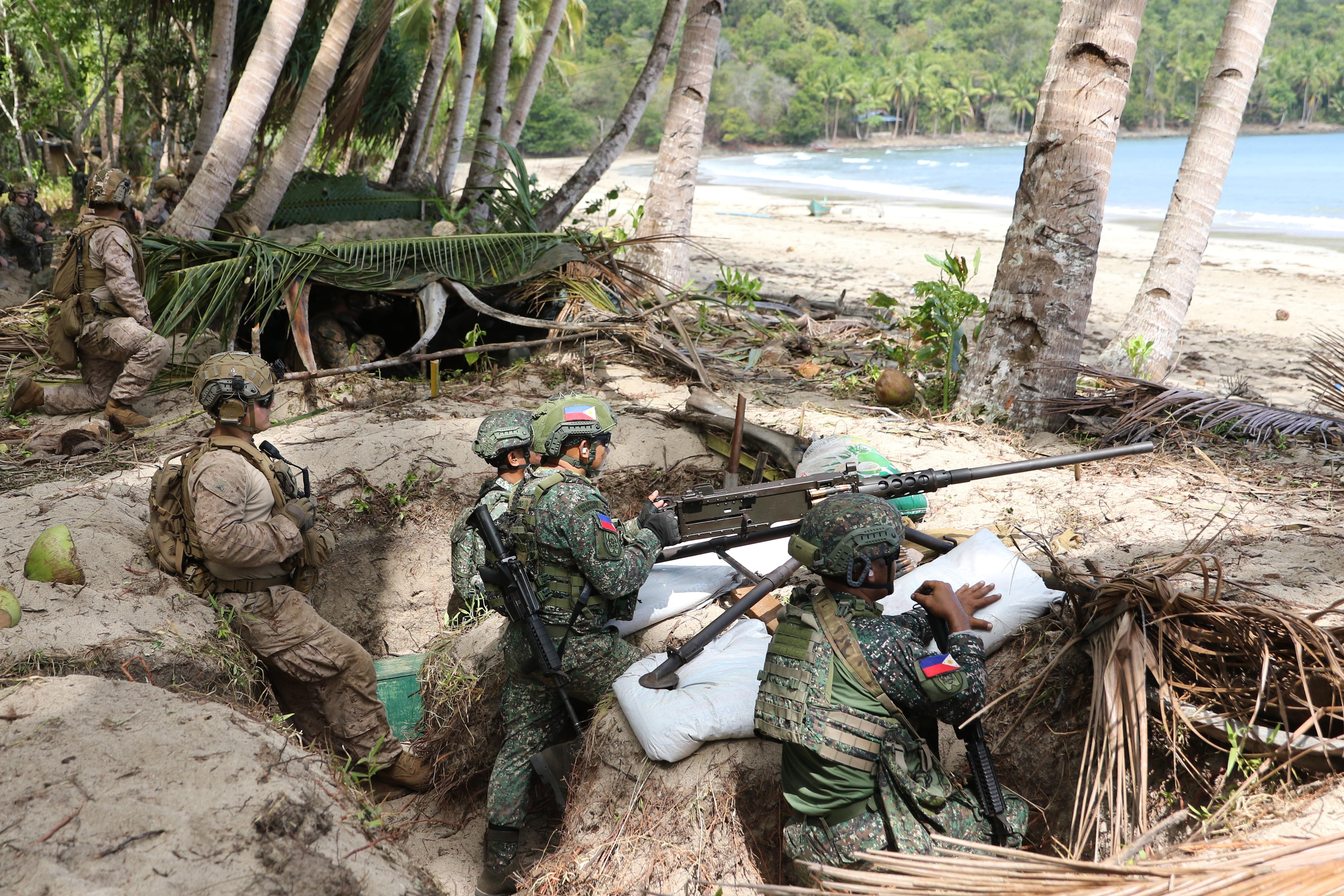
As a notional enemy amphibious force edged closer to the beach, Australian, Kiwi, Philippine and American troops hiding in foxholes camouflaged by palm fronds unleashed a barrage of small-arms fire.
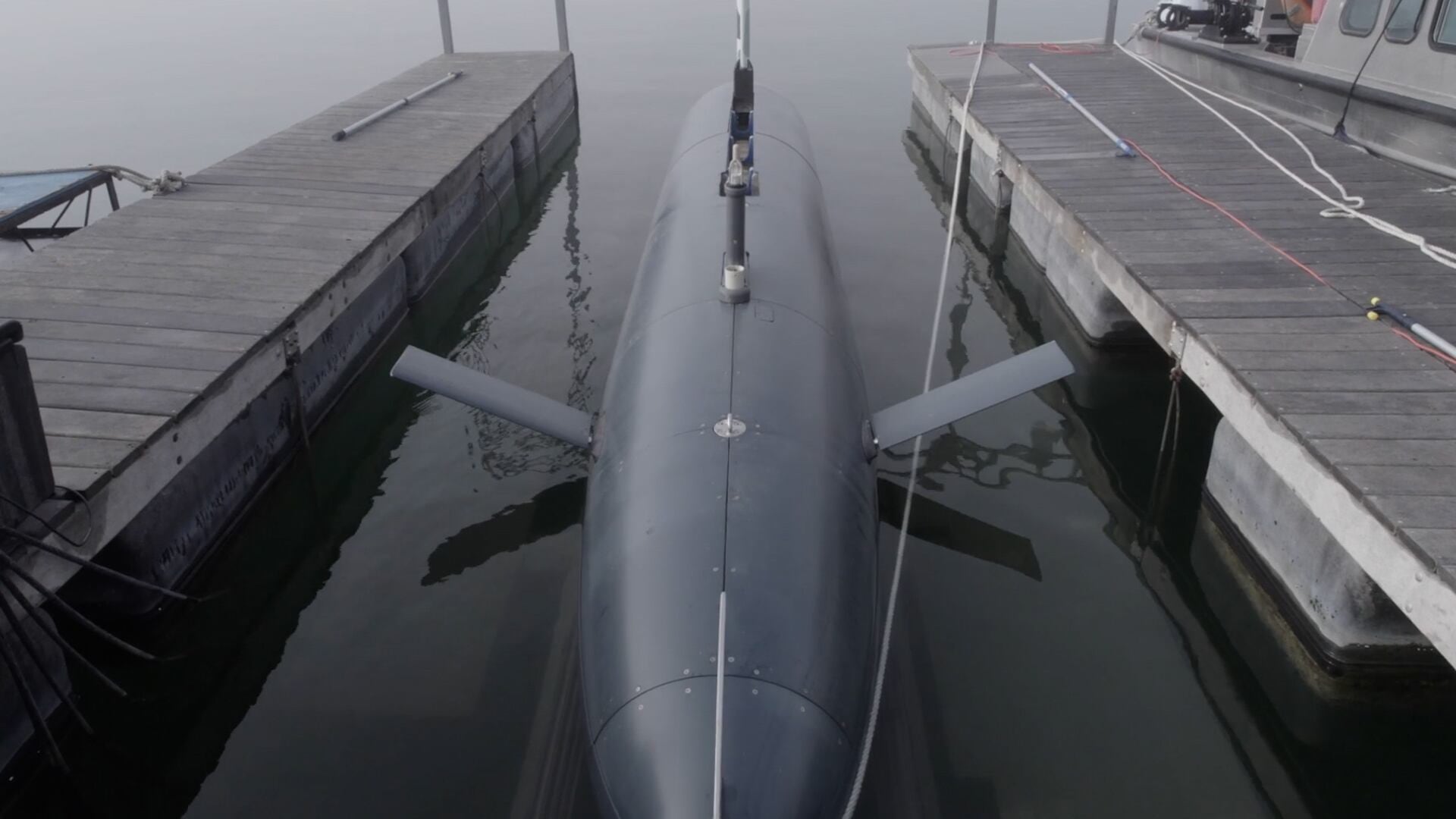
Afterwards, as the repulsed “enemy” withdrew in disorder, a coup de grace was delivered by an explosive-laden, first-person-view drone. As silence returned to the Aporawan beach in Palawan, disabled unmanned surface vessels – representing enemy landing craft – drifted in the waves or sat burning on the shore.
This counter-landing, live-fire exercise on Apr. 27 was a keystone event in Exercise Balikatan, an annual series of multilateral war games held in the Philippines.
On the day, more than 500 troops worked shoulder to shoulder – which is what “Balikatan” means – to repel the notional enemy amphibious assault.
Gen. Romeo Brawner Jr., Chief of the Armed Forces of the Philippines, explained the event’s “real value is showcasing our resolve to work together to defend the Philippine archipelago and to uphold the rules-based international order. So that’s the more important aspect of all the exercises we’re doing here.”
Palawan is an important location, Brawner added, since it faces the West Philippine Sea and the country’s exclusive economic zone.
“It’s really very important that we defend this territory of the Philippines, and we’re very fortunate that we have with us partners from like-minded nations.”
Although nobody was naming aloud the threat, China with the world’s largest armed forces is the obvious focus of attention in these Balikatan drills.
The South China Sea is witnessing a ramp-up of tensions as Beijing claims maritime territory and builds up reclaimed islands that act as forward military bases.
Involving approximately 17,000 troops from seven countries, Balikatan 2026 is being held from Apr. 20 to May 8.
The primary U.S. Marine Corps participation in the counter-landing exercise was Marine Rotational Force - Darwin (MRF-D), currently comprising 1/5 Marines.
Col. George Flynn III, commander of MRF-D, told Defense News: “We have the ability to be a global force in readiness and in support of our allies.”
Flynn said the very fact that he was standing on that particular Palawan beach demonstrated the ability of the Marine Corps to show up when it is needed.
“We can talk about all the capabilities we have, but the integration of those capabilities is the cornerstone of how this is done right,” he said. “The friendships that we made being in the dirt in defensive positions alongside each other, that’s what really matters about this event.”
Maj. Gen. Thomas Savage, commander of the 1st Marine Division, was pleased with the conduct of the drill, which “was much more complex, with more countries integrated in the live-fire exercise.”
Asked whether the U.S. military is being sidetracked by the Iran war, Savage responded: “The United States has the capability to commit to all of our global commitments, and this alliance we have with the Philippines is rock solid.”
Nor did all this activity and other maritime drills go unnoticed by China.
The Southern Command of the People’s Liberation Army reported that a four-ship naval task force sailed near Luzon in response to “the current regional situation.”
Among the vessels was a Dongdiao-class intelligence gathering ship to soak up signals and electronic emissions.
Capt. Paul Michael Hechenova, commanding officer of the Philippine frigate BRP Miguel Malvar, said: “No confrontation, no radio challenges. They’re just here monitoring our activity.”
Gordon Arthur is an Asia correspondent for Defense News. After a 20-year stint working in Hong Kong, he now resides in New Zealand. He has attended military exercises and defense exhibitions in about 20 countries around the Asia-Pacific region.